


Sometimes people expect mental health struggles to come crashing back dramatically.
But for many alumni, it happens quietly.
A missed therapy appointment turns into a month without support. Sleep starts getting worse again. Small responsibilities feel heavier. Texts go unanswered. Motivation fades. The routines that once helped someone stay grounded slowly disappear.
Then one day, they realize they’re not okay anymore.
Not in a dramatic movie-scene kind of way. More like waking up in a life that suddenly feels too heavy to carry.
At Seacoast Wellness Center, we’ve walked beside many people during this exact moment. People who once felt stable, connected, hopeful — and then slowly found themselves struggling again.
That experience can feel deeply isolating. But it’s also deeply human.
And for many people, reconnecting with support like structured daytime care becomes the thing that helps them stop spiraling further.
Mental Health Setbacks Can Carry a Quiet Kind of Shame
One of the hardest things about emotional relapse is how invisible it often is.
Someone may still be going to work. They may still answer texts occasionally. They may still smile in public. From the outside, things can look “fine enough.”
Inside feels different.
Inside, they may be exhausted from fighting their own thoughts every day.
We often hear people say things like:
- “I thought I was past this.”
- “I don’t want to start over.”
- “People think I’m doing better.”
- “I feel embarrassed needing help again.”
That shame can keep people isolated far longer than they need to be.
Especially alumni who worked incredibly hard to get stable the first time.
There’s this unspoken pressure many people carry after treatment or therapy:
“I should know how to handle this by now.”
But mental health recovery isn’t about never struggling again. It’s about learning how to return to support before the spiral becomes overwhelming.
That’s an important difference.
Sometimes the Warning Signs Look Like “Burnout”
Not everyone recognizes depression or anxiety when it returns.
Many people explain it away as stress, exhaustion, burnout, or “just going through a rough patch.”
And sometimes it starts that way.
But over time, those feelings can slowly grow into something heavier.
You may notice:
- Pulling away from friends or family
- Increased irritability
- Sleeping too much or barely sleeping
- Loss of motivation
- Trouble concentrating
- Constant emotional exhaustion
- Feeling numb instead of sad
- Avoiding responsibilities
- Quiet hopelessness about the future
For some people, the scariest part is how normal it starts to feel.
Humans adapt to emotional pain surprisingly quickly. People can live in survival mode for months before realizing how disconnected they’ve become from themselves.
One alumni member once described it this way:
“I didn’t notice how bad things got because I adjusted to being miserable little by little.”
That sentence stays with people because it’s honest.
Mental health struggles rarely announce themselves loudly at first.
You Don’t Have to Hit a Breaking Point Before Getting Help
Many people delay reaching out because they think they need to completely fall apart first.
They wait for a crisis.
A panic attack.
A hospitalization.
A relationship collapse.
A total inability to function.
But support doesn’t need to be earned through catastrophe.
You are allowed to seek help because:
- Life feels emotionally heavy
- You’re slipping back into isolation
- Anxiety is becoming unmanageable
- Depression is affecting daily life
- You feel disconnected from yourself
- Coping is getting harder
One of the healthiest things a person can do is recognize they need more support before everything fully unravels.
That’s not weakness.
That’s awareness.
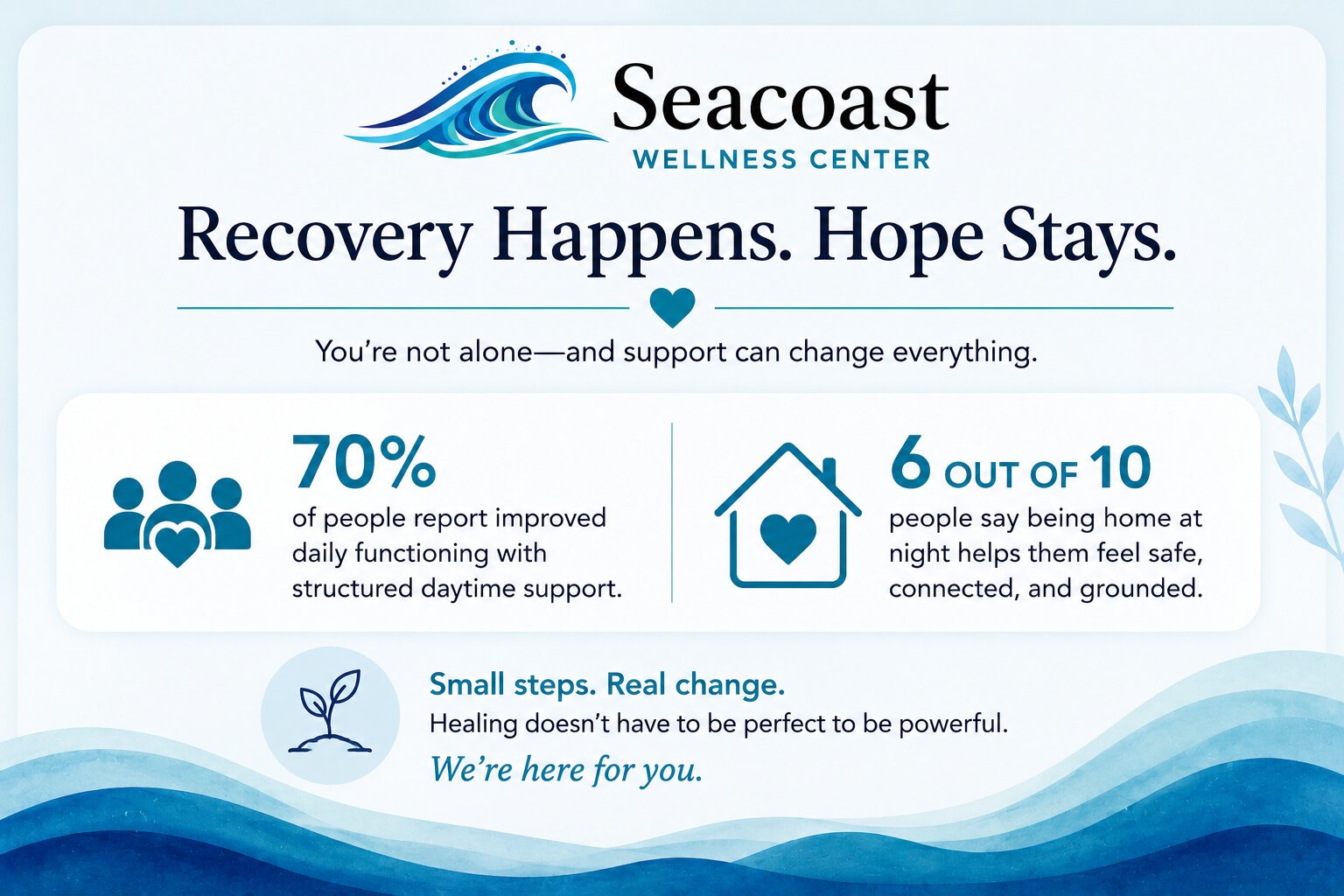
Returning to Care Doesn’t Mean You Failed
This is something many alumni need to hear more than once.
Coming back for support is not failure.
Needing additional care does not erase your progress, your growth, or the work you already did.
Life changes people. Stress accumulates. Grief happens. Relationships end. Burnout builds quietly. Sometimes mental health symptoms return even after long periods of stability.
That doesn’t mean treatment “didn’t work.”
It means you’re human.
At Seacoast Wellness Center, we’ve seen people return feeling ashamed, awkward, or convinced they let everyone down. Often, they expect judgment when they walk back through the door.
Instead, what they usually find is relief.
Relief that they no longer have to pretend everything is okay.
Relief that someone understands.
Relief that support still exists.
There’s something powerful about realizing the door never actually closed.
Structured Support Can Help People Feel Like Themselves Again
There’s a middle ground in mental health care that many people overlook.
Some individuals don’t need live-in treatment or hospitalization. But they also need more support than an occasional therapy session can provide.
That middle level of support can be life-changing.
Programs offering consistent daytime mental health care help create stability during periods when someone feels emotionally untethered.
For people searching for a mental health day program Dover, the goal is often not to “escape life.”
It’s to regain enough steadiness to participate in life again.
Structured care may help people:
- Rebuild routines
- Process difficult emotions safely
- Develop healthier coping skills
- Reduce isolation
- Reconnect with peers
- Stabilize anxiety or depressive symptoms
- Feel less emotionally alone
Sometimes healing begins with something surprisingly simple:
Having somewhere supportive to go every day.
Not everyone has that in their normal environment.
Healing Often Happens in Small, Quiet Moments
People sometimes expect recovery to feel dramatic.
But more often, it unfolds slowly.
A person starts sleeping through the night again.
They shower consistently.
They answer a friend’s message.
They laugh unexpectedly during group therapy.
They feel one small moment of hope after weeks of numbness.
These moments may seem tiny from the outside, but internally, they matter deeply.
Because mental health struggles often shrink someone’s world.
Recovery slowly helps expand it again.
We’ve watched alumni reconnect with hobbies they abandoned months earlier. We’ve seen people rediscover parts of themselves they thought were permanently gone. We’ve seen individuals return after difficult setbacks and build stability they never thought possible.
Not perfectly.
Not all at once.
But gradually.
That’s how most healing works.
Isolation Makes Everything Heavier
One of the biggest risks during emotional relapse is isolation.
People start convincing themselves:
“No one understands.”
“I don’t want to burden anyone.”
“I should handle this myself.”
The longer someone stays isolated, the more convincing those thoughts become.
Mental health struggles thrive in silence.
Connection interrupts that silence.
Not performative positivity. Not forced motivation. Just honest human connection with people who understand what it’s like to struggle.
That’s part of why structured support environments matter so much for many alumni. They remind people they are not uniquely broken for having a hard season.
Pain feels smaller when it’s no longer carried alone.
You Are Still Allowed to Hope
Sometimes people become afraid to hope again because they worry another setback will hurt even more.
So they stop imagining improvement altogether.
But hopelessness is not proof that recovery is impossible.
It’s often a symptom of the struggle itself.
There are people reading this right now who feel emotionally exhausted, disconnected, embarrassed, or scared they’re slipping backward again.
Please hear this clearly:
You do not need to wait until everything collapses to deserve support.
And you do not need to be perfectly okay before reaching back out.
Some of the strongest recoveries begin quietly.
With honesty.
With openness.
With one small decision to stop carrying everything alone.
FAQ: Returning to Mental Health Support After a Setback
Is it normal to struggle again after feeling mentally stable?
Yes. Mental health recovery is rarely linear. Stress, burnout, grief, life changes, or untreated symptoms can cause old struggles to resurface even after long periods of progress.
Does returning to treatment mean I failed?
No. Reaching back out for support is often a sign of self-awareness, not failure. Many people benefit from reconnecting with care during difficult periods.
What if I feel embarrassed needing help again?
That feeling is extremely common. Shame keeps many people isolated longer than necessary. But struggling again does not erase the growth or progress you already made.
How do I know if I need more support than weekly therapy?
If symptoms are significantly affecting daily functioning, relationships, motivation, emotional regulation, or safety, more structured support may be helpful.
Can structured daytime mental health care help with depression and anxiety?
Yes. Programs offering daytime mental health support can help people stabilize emotionally through therapy, routine, connection, and consistent care.
What if I stopped treatment before?
Many people pause treatment and later return when they’re ready. Healing isn’t about doing everything perfectly. Returning for support after stepping away is more common than people realize.
Why does isolation make mental health symptoms worse?
Isolation often increases hopelessness, emotional overwhelm, and negative thinking. Human connection and support can help interrupt the cycle many people get stuck in during difficult periods.
Call 603-316-5337 or visit our partial hospitalization program services to learn more about our partial hospitalization program services in Dover, New Hampshire.